Sunday, April 13, 2014

Kandhar Anubhuti : Verse #5 - Path to overcome the Veil of Maya (Maga Mayai Kalainthida)


மக மாயை களைந்திட வல்ல பிரான்
முகம் ஆறும் மொழிந் தொழிந்திலனே
அகம் மாடை, மடந்தையர் என்(று) அயரும்
சகமாயையுள் நின்று தயங்குவதே. (5)

Maga Mayai kalainthida valla Piran
Mugam Aarum Mozhinthu Ozhinthilane
Agam Madai Madanthaiyar endru ayarum
Jaga Mayaiyul Nindru Thayanguvathe (5)


மக மாயை - The Great Maya (Veil of Delusion)
களைந்திட - To remove
வல்ல  - Able (Having the Ability)
பிரான் - Lord 
முகம் ஆறும் - Faces Six
மொழிந்து - Say
ஒழிந்து இலனே - (Maya) Is not Vanquished
அகம் - House (properties)
மாடு - Wealth
மடந்தையர் - Women
என்(று) அயரும் - Tiring
சகமாயையுள் - In Maya
நின்று தயங்குவதே - (mind) Stays

Short Meaning
I seek refuge in chanting the name of the Six Faced Lord - Why hasn't the powerful veil of Maya been removed? My mind takes refuge in House, Wealth and Women which is indeed Maya. 

Gloss
Vedas declare - 'Ekam Eva Advitiyam' i.e., There is Only One, and it is Undivided. However, in our life we see so many things around us - Living and Inert. This is the Greatest Delusion of all, and is rightly called Maya (the delusion)

We have to understand that this delusion is one of the Acts of God(dess) too. We usually associate three acts to God:
1. Creation (Brahma)
2. Maintenance (Vishnu)
3. Destruction (Rudra)

This concept has become quite famous across the world, and is called the Holy Trinity. Even many science and management Texts have some reference to this. 

But, in broad, there are Five major acts - Lalitha Sahasranamam captures this beautifully:

Srushti kartri - Brahma rupa (She Creates - She is in the Form of Brahma )
Goptri - Govinda Rupini (She Protects / Sustains - She is in the Form of Govinda)
Samharini - Rudrarupa (She destroys (all Forms) - She is in the Form of Rudra)
Tirodanagari-Ishwari (She Obfuscates the Reality - She in in the Form of Ishwara)
Sadashiva - Anugrahata (She showers Grace - In the form of SadaShiva)
Pancha-Krutya-Parayana (She thus, does all 5 Acts)

The first three acts are well known - Let us look at acts 4 and 5

(4) Obfuscation (Tirodanagaram) - Everyone knows that they are going to die. What makes people run around and do things? Why aren't people so demotivated that all this will pass and they'll die? The secret lies in this aspect of God. This delusion makes us believe that there are things that are to be pursued (apart from God) and they bring joy to us. This is achieved by two ways - 
  • Vikshepam : One appears as another. In Vedic texts, there is a common example of people getting scared of a rope as snake. Once they know that it is just a rope, it is impossible for us to be scared of it again
  • Avaranam : The reality is hidden by a screen / veil

This is one of the greatest secrets - The God Himself creates this delusion so that the drama continues

(5) Grace (Anugraham) - A soul which continuously searches for happiness in the external world, due to the previous act after sometime figures out that whatever it does, acquires, the happiness is soon replaced by sorrow. Nothing in this external world has the capability to give eternal happiness. On repeated search and failure, the soul finally is depressed and wonders if all of this is real at all. At that moment, it cries out for help. A Guru appears by the Greatest Grace (Anugraham) and then the reality is revealed - The Grand Truth of Unity is known to the soul, and the Soul, not different from the Supreme, merges after losing its separate identity. 

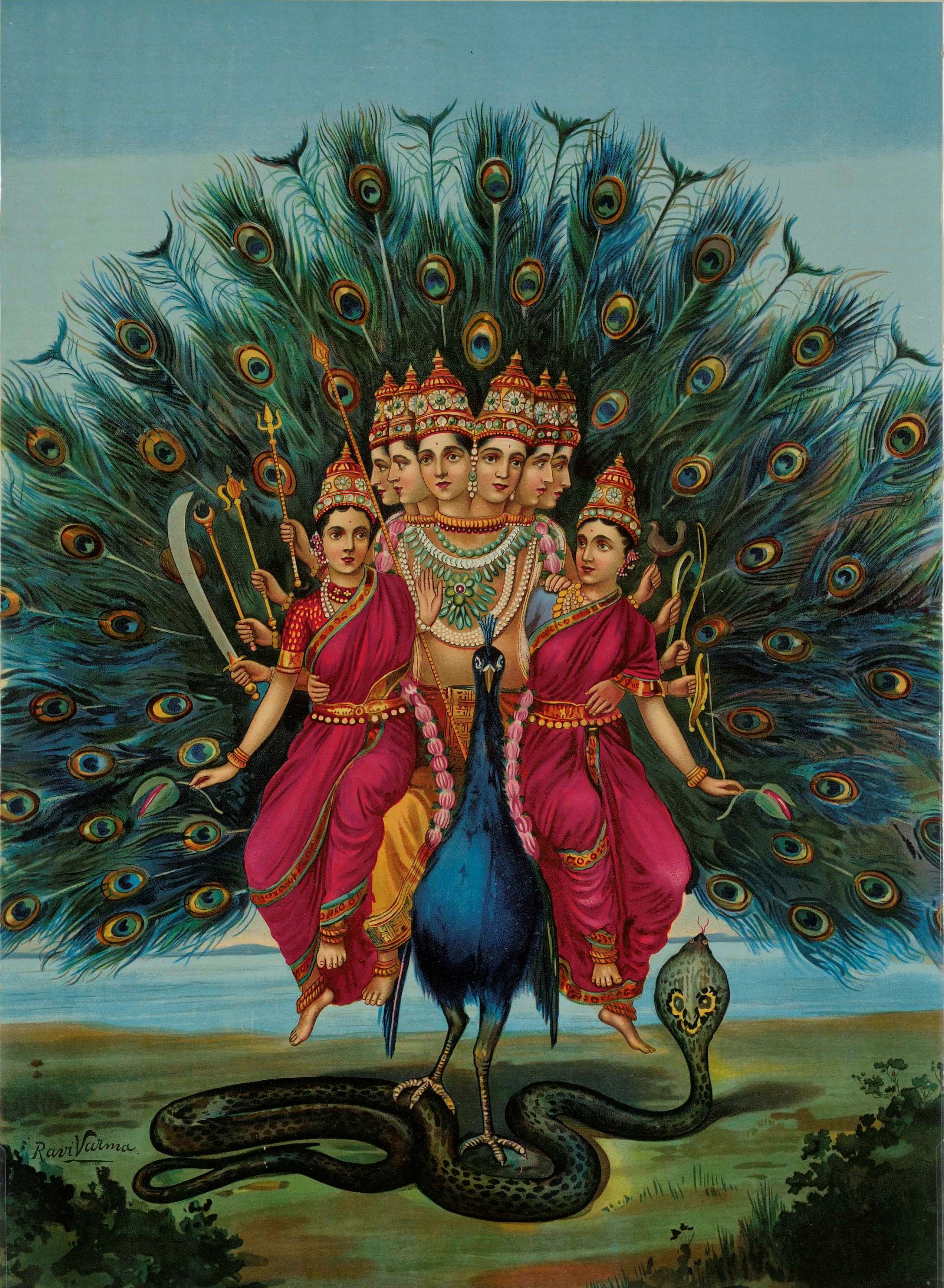
The whole process can be split into two. The effort of the Soul to reach God, and the Descent of Grace. This is usually represented by the Six Faced Subrahmanya Chakra


The upward facing triangle, symbolizes the Ascent of Spirit. When the Spirit realizes that there is no more effort possible, and finaly surrenders, the Descent of Grace happens, and then in the complete equilibrium, we have the Subrahmanya Chakra (also called Star of David). 

மக மாயை களைந்திட வல்ல பிரான் - In this verse, Sri Arunagiri calls as the Lord who has the ability to bestow Grace and remove the Maya. 

முகம் ஆறும் மொழிந் தொழிந்திலனே - He then says that He has been repeating the name of the Six Faced Lord - Still, the veil of Maya has not been removed (which for the devotee symbolizes that the ascent of spirit is not complete)

அகம் மாடை, மடந்தையர் என்(று)  - The mind, instead of turning towards God (inward), is still being drawn out to external desires like property, wealth and women. As explained in the last verse, this is not specifically against women, but generally indicates the feeling of lust, which comes out this way from the perspective of Sri Arunagiri

அயரும் - Tiring. As mentioned before, all our external quests are tiring, and do not bring lasting happiness. 


சகமாயையுள் நின்று தயங்குவதே - Sri Arunagiri complains that why does my mind get stuck in this Worldly Maya (Jaga Mayai)?

Let us also invoke the name of the Lord Murugan, till the veil of Delusion is removed, and we unite with the Supreme Lord, of Six Faces. 


Monday, April 7, 2014

Kandhar Anubhuti : Verse #4 - When will I be let off the leash of bonds? (Valai patta)


வளைபட்ட கைம் மாதொடு, மக்கள் எனும்
தளைபட்டு அழியத் தகுமோ? தகுமோ?
கிளைபட்டு எழு சூர் உரமும், கிரியும்,
தொளைபட்டு உருவத் தொடு வேலவனே. (4)


valai patta kai madhodu makkal enum
thalai pattu azhiya thagumo? thagumo?
kilai pattu ezhu soor uramum giriyum
tholai pattu uruva thodu velavane (4)

வளை - Bangle (bracelet)
பட்ட - Adorning
கை - Hand
மாதொடு - Lady (and)
மக்கள் - kids and relations
எனும் - so called
தளைபட்டு - bound by leash
அழியத் - To be ruined
தகுமோ? தகுமோ? - Is it ok? Is it ok?
கிளைபட்டு - With all the relations
எழு - arose
சூர் - Surapadman
உரமும் - chest
கிரியும் - Hill
தொளைபட்டு உருவத் - Pierced
தொடு - Threw / Launched
வேலவனே - God with Spear

Short Meaning
Oh Lord of Spear, who pierced the strong chest and hill of the mighty Surapadman! Is it ok that I be leashed by bonds with women (adorned with bangles in their hands) and kids and relatives and be ruined? 

Gloss
I am not exactly known for my brevity, but, it is quite possible to be misled by the direct meaning of this verse. So, request you to please go over the extended gloss of this verse in patience. (since the theme will repeat few times more in the further verses)

Humans - men and women are totally self sufficient, because their souls is no different from the Super Soul, Shiva. This observation is true only if people look inward. 

Due to the force of Maya, men and women are both drawn outward to the world in mind, and hence there is a constant feeling of insufficiency. At the beginning was the Sound (Nada) and from the Divine Will arose the Mighty Universe, beginning with a point (Bindu). The point first separated into two (kala - the act of splitting). This Holy couple is usually referred to as Shiva / Parvati or the Yin and Yang or Purusha and Prakriti and so on - A male aspect and a female aspect. [Please remember the Thiruppugazh which praises Murugan as Nada Bindhu Kala'di Namo Namo - One Who is earlier to the Nada (Sound), Bindhu (Point), Kala (Separation)]

The act of separation creates a longing to reunite, and this longing is evident in all species. Just that, the feeling of completeness cannot be sought outside. The feeling can be overcome only by uniting Shakti and Shiva within each of our self. In Tantra, this is expressed as Kundalini in the Mooladhara Chakra (at the base of the Spine) awakened and uniting with Shiva in Sahasrara Chakra (Thousand Petalled Lotus) at the top of the head. But, this feeling, when externalized, makes people seek the opposite gender and is fundamental because the split is Primal. 

Sri Arunagiri, before he got realized was also severely bound by lust and sought company of women that he spent all his wealth in this pursuit (also evident in Kumarakottam Thiruppugazh - 'Arivilappithar'). This makes Sri Arunagiri sing against this in most his verses. This should NOT be interpreted as Sri Arunagiri is against women. He feels Lord Murugan's Grace which led him not to seek completeness outside, but inside. So, based on his experience in his body before realization, he sings out against cautioning people not be bound by lust. The warning is equal for both men and women.  However, while he expresses this, it comes out as warning against women (because of his perspective)


வளைபட்ட கைம் மாதொடு - Sri Arunagiri wants a life which is not binding. According to Hindu Philopsophy, all bonds are leashes - It doesn't matter if a leash is made of steel or of Gold. Both bind the person down. Similarly, Sri Arunagiri wants to transcend being bound by lust of women (who decorate their hands by wearing bangles) and kids (மக்கள்). This doesn't mean Sri Arunagiri is against concept of family. This concept is essential for people to mature and grow together. At the same time, pure love is non-binding. If it is not pure love, it causes envy, jealousy, doubt and a myriad negative feelings which are not liberating. So, the person has to be born again and again till he transcends it. For a person who has transcended this, does not require structures like family to evolve. So, Sri Arunagiri wants be unbound, and not be leashed into bonds. 


தளைபட்டு அழியத்  - Sri Arunagiri is quite strict when it comes to describing the act of being bound. He says, is it ok to be leashed and ruined? (or destroyed)

தகுமோ? தகுமோ? - He questions the Lord if it is ok? The question is rhetorical. He emphasizes is anguish by asking Lord Murugan if it is ok for him to be bound and ruined? 

கிளைபட்டு எழு சூர்  - When the evil overlord Sri Surapadman waged war with Lord Subrahmanya, he came to the war with all his relatives (கிளை) - The word கிளை means branches. In this context, the branches indicate 'family'. 

உரமும் - The chest is symbolic of strength. Lord Murugan pierced the Chest of Asura Surapadman.

கிரியும் - One of the brothers of Surapadman, Tarakan (or Tarakasuran) stood in the way of Lord Murugan and His army as a mountain. Lord Murugan pierced and destroyed this mountain too. (தொளைபட்டு உருவத்)


தொடு - The word means 'To launch' - When the evil Asuras came in various forms, Lord Murugan launched His Spear which is nothing but pure Knowledge (Gnana) and destroyed them. 

வேலவனே - Since Sri Arunagiri invokes the Lord with the imagery of Him destroying evil with his Spear (vel), he calls the Lord as Velavan (One Who Holds the Spear)

As mentioned earlier, the Spear is Great Goddess Parvati and Her power (Shakti) - So, there is nothing in the known / unknown Universe that can overcome it. People invoke Lord by shouting 'Vel Vel Muruga, Vetrivel Muruga'

With this verse, we should pray to Lord Murugan as Lord Velavan, Who will not let us be bound, and grant us the final liberation and Unite with Him. 

Saturday, March 15, 2014

Kandhar Anubhuti : Verse #3 - What is the Ultimate Truth? (Vaano Punal Paar)


வானோ? புனல் பார் கனல் மாருதமோ?
ஞானோ தயமோ? நவில் நான் மறையோ?
யானோ? மனமோ? எனை ஆண்ட இடம்
தானோ? பொருளாவது சண்முகனே (3)

vaano punal paar Kanal maruthamo
gnaanothayamo navil naan-maraiyo
yaano manamo enai aanda idam 
thaano porulavathu shanmugane! (3)


வானோ - (Is it ) Space?
புனல் - Water
பார் - Earth
கனல் - Fire
மாருதமோ - Or Air?
ஞானோ தயமோ? Is the arise of the Intellect?
நவில் - (Is it) Spoken (or Chanted)
நான் மறையோ - Four Vedas
யானோ -  Is it my Self Identity?
மனமோ? - Or my mind?
எனை ஆண்ட இடம் தானோ? Is it the place where you Offered your Grace?
பொருளாவது - Meaning
சண்முகனே - Six Faced Lord!

Short Meaning
What is the Unchanging Truth, Oh Six Faced Lord? Is it the Five Basic elements? (Space, Air, Fire, Water, Earth) or Is it just intellect? Or is the Four Vedas? Or is it my identity? Or is it my mind? Or is it the Place where you offered your Grace? 

Gloss
In the gloss of the last verse, we briefly touched upon Nirvana Shatakam, where Sri Sankara says He is not the Five Elements and negates what He is not. Sri Arunagiri also follows the same suit - He negates what He is NOT. It seems like a set of rhetorical questions, but He means that The Ultimate Truth is neither of them.

The Five Elements that are often mentioned in Indian Philosophical texts are:
1. Space - Everything exists in Space. Space was the first thing to be created. Space has only one dimension - It exists. No other attribute

2. Air - From space came air - Air has two attributes. It exists and can be felt

3. Fire - From Air came Fire. Fire should not be construed as flame. It is basically energy or heat. Fire can be seen / observed apart from two other attributes. 

4. Water - From Fire came water! Even in chemistry, water molecule is caused in extreme heat by fusion of two hydrogen and one oxygen atom (air and heat , the two previous elements).  Water can be tasted apart from the other three attributes

5. Earth - From water came earth. Apart from the four attributes, earth also has an attribute of smell.

These are collectively referred to as 'Pancha Bhutas' (Five elements) - Everything in the world is made up of varying amount of these five elements. Our body is indeed a collection of all these elements. However, the Ultimate Reality is that we are not either or collection of five elements. 

Then, Sri Arunagiri wonders if the final truth is the Intellect. In Taittriya Upanishad, Sri Bhrigu Maharshi wants to know the Ultimate Truth. 

His first realization is Body is God. He later introspects further and concludes Breath (Prana) is God. He is asked by his father to go deeper, and then deducts that Mind is God. He then digs deeper to deduce that Intellect is God. His father asked him to dig a little deeper to find the truth. Sri Bhrigu realizes that Happiness is God. He never comes back to his father to check if that is the truth. He realizes that Ananda is the form of God, and is God Itself. 

In the line of Taittriya Upanishad, Sri Arunagiri seems to ask is the the Mind? Is it the intellect? 

In Tamil the word மறை means 'to hide' - Since Vedas show the direction to explore the Truth that is hidden, it was also called மறை. The vedas are classified into four - Rig, Yajur, Sama and Atharvana. Sri Arunagiri indicates that though Vedas are very sacred, they only point to the Truth, but not the Truth itself. 

Sri Arunagiri asks if it what he identifies himself as. (யானோ?)

Finally, Sri Arunagiri asks if it is the place where he got the Grace of the Lord. Though the place of realization is very sacred, however, it is not the Ultimate Truth. 


For the second time in the Anubhuti, (after the invocatory verse), Lord Subrahmanya is referred to as 'Shanmukha', the Six faced Lord. 

Lord Shiva, as described in scriptures has Five Faces - Sathyojatham, Vamadevam, Tatpurusham, Ishanam and Aghoram.

In Thirumantiram, one of the Greatest ever Mystical texts in Tamil, describes a sixth face of Lord Shiva which is visible to Greatest of Gods and Saints in their deepest meditative states. This face is called 'Atho Mukham' , and is pointing downwards. 

From this, we can understand that Lord Subrahmanya is none other than the Greatest Form of Lord Shiva. 


The Ancient One of Athomukha
Created Universe vast here below;
In Athomukha He animates all life;
He is Lord of Athomukha Sakti of lotus eye  [Thirumantiram, v524]

The Sakti of the Sadasiva,
Has faces five and hands ten,
Of these, the downward looking face (Athomukha)
Is divine far indeed. [Thirumantiram, v1402]

This information is usually a guarded secret in the texts and is not well known. Infact, out of the 3000 verses, only 4 verses talk about the 6th face of Lord Shiva. All popular texts only talk about the five faces. 

Let us also beseech the Supreme Form of the Lord, the Six Faced Form, Sri Shanmukha to Grant us the Intellect to Know the Ultimate Truth. 


Monday, March 3, 2014

Kandhar Anubhuti : Verse #2 - Show me the way to Salvation! (Ullasa Nirakula)


உல்லாச, நிராகுல, யோக இதச்
சல்லாப, விநோதனும் நீ அலையோ?
எல்லாம் அற, என்னை இழந்த நலம்
சொல்லாய், முருகா சுரபூ பதியே. (2)

ullasa nirakula yoga idha
sallaba vinodanum nee alaiyo?
ellam ara ennai izhantha nalam
sollai muruga sur bhoo pathiye (2)


உல்லாச - Joyousness
நிராகுல - A State without pain
யோக - In a state of divine Union
இதச் - Gentle
சல்லாப - Granting bliss
விநோதனும் - Unique one
நீ அலையோ - Are you not?
எல்லாம் அற - Without any bonds
என்னை இழந்த - Loss of Self-Identity
நலம் - benefit (blessing)
சொல்லாய் - Tell me (Grant me the Knowledge)
முருகா - Lord Muruga
சுரபூ பதியே - Lord of Gods and Humans


Short Meaning


Lord Muruga, Are you not the Unique One who grants Joyousness, painless state, always in the state of Divine Union, and Gentle? Oh Lord of Gods and Humans, Grant me the knowledge of reaching the state where I have no separate identity! 

Gloss
Everyone has a bundle of problems, and everyone wants a way out. No one wants suffering. It is the natural state of our Being to be in Bliss. That's why, we search everywhere for happiness and peace. Every action taken by a human is to either avoid pain, or to find pleasure. 

Lord Subrahmanya, is beyond, the states of sorrow or pain. He is eternally in Joy, for His Being is itself joyousness. 

நிராகுல means a state without pain - Aakulam means pain. Sri Arunagiri uses the negative form of this word - niraakulam to indicate a state without pain. (He uses aakulam later (verse 46), but in a different, specific format as 'Chintaakulam - mental pain')

யோக - Yoga is a state of Union. Lord Murugan alone exists. When this is experienced, we can identify ourself in a state of Supreme Union (Anubhooti) with Lord Murugan

இதச் - Gentle. This also has a meaning of being Gentle, pleasant. This word has a connotation of Peace (without wild emotions of ecstasy). Interestingly, the word Lalitha, the 1000th name in Lalitha Sahasranama also has a similar meaning. 

சல்லாப - Granting bliss - Not only is the Lord in Bliss, but also Grants it to His devotees. 

Sri Arunagiri says that Lord Subrahmanya, is a summation of all positive states. Since Sri Arunagiri cannot find anyone else like that, He calls the Lord as Vinodan (விநோதனும்) - One who is Strange! (in a good way) - This should be interpreted as One who is Unique. 

எல்லாம் அற என்னை இழந்த நலம்
This is a very profound line. Sri Arunagiri says he wants the benefit (???) (நலம்) of the state where he loses everything (எல்லாம் அற), including himself (என்னை இழந்த)

The soul is NOT different from the Supreme Lord, for the Lord alone exists (ekam eva Advitiyam - One Alone Exists)

Why does the Soul identify with other stuff than Itself? We identify ourselves with the body (name, age, gender etc), our belongings (my car, my house etc.) the relations (my parents, my son, my wife, my husband etc.) OR mental constructs (handsome, ugly, beautiful, fair, rich / poor etc)

What exactly are we, if we remove every kind of association we identify ourselves with? Scary thought, isn't it? 


When Adi Sankara was about 6 years of age, He leaves his family behind and travels to the banks of river Narmada to seek Sri Govinda Bhagawatpada, His Guru. The Guru was inside a cave, and asked "Who is that standing outside?" - Sri Sankara, who is Lord Shiva Himself, responded with a beautiful poem - Nirvana Shatakam. He says "I am not the mind, intellect, memory, ego, nor the five senses, nor the five basic elements for I am Pure Conscious Bliss - I am Shiva! "

He goes on negating stuff ("I am not a mother nor a father, not a guru or a disciple, neither born nor dead etc") and finally says "I am the undivided, pure consciousness that is Shiva!" 

We are hidden from our true nature because of layers upon layers of deadening abstractions which cloud the true nature that shines like the Sun. 

Though this is the truth, we are unable to see it because of these false relations and the heaps of Karma that has been accrued over millions of births. This has to be removed. Interestingly, there are two names in Lalitha Sahasranamam that pops to my mind - Krodhakara Angushojwala (One who angrily cuts the bonds with a shining weapon) and Bhavaranya Kutarika - An axe that cuts the dense forest of Karmic Reactions.

Once the act of identification with external stuff goes away, we turn inwards and finally appreciate the Supreme Self, which Shines forth - She cannot be found when searched outside, but She shines when we look inward ("antar mukha samaradhya, bahir mukha sudurlabha"). Let us not be distracted, all the we see outside is also Lord - Goddess is perceived as inert matter when projected outside, but as pure consciousness when the attention is diverted inside ("chitshakti chetana rupa, jada shaktir jadatmika")

Sri Arunagiri prays for the state where all external bonds are lost, and the sense of identification with the body as a separate being from the Lord ceases. When this state is achieved, we experience Samadhi, a state of Divine Union (Anubhooti). 

சொல்லாய், முருகா (எல்லாம் அற என்னை இழந்த நலம்)
Sri Arunagiri wants Lord Murugan to give him the Maha Upadesham (the Teaching) to reach the state as described above

சுரபூ பதியே 
Sura means Devas. Bhoo means residents of Earth. Pathi means Lord. Sri Arunagiri calls Murugan as the Lord of Devas and Humans (one who is not a Sura is 'Asura' meaning the evil forces) -Technically, Sri Arunagiri condensed Sura-Pathi + Bhoo-Pathi as Sura-Bhoo-Pathi.

Let us join Sri Arunagiri, in seeking Lord Murugan for the final blessing of Divine Union of our soul with Him

Friday, February 21, 2014

Kandhar Anubhuti : Verse #1 - Let me always Sing your Glory! (Aadum Pari)


ஆடும் பரி, வேல், அணிசேவல் எனப்
பாடும் பணியே பணியா அருள்வாய்
தேடும் கயமா முகனைச் செருவில்
சாடும் தனி யானைச் சகோதரனே. (1) 

aadum pari, vel, ani seval ena
paadum paniye paniya arulvai
thedum kayama muganai cheruvil
saadum thani yaanai sagotharane  (1)

ஆடும் பரி - Dancing Peacock
வேல் - Spear
அணிசேவல் - Handsome Rooster
எனப் - about
பாடும் பணியே - Singing Service
பணியா - As my Duty
அருள்வாய் - Grace me
தேடும் - Searching
கயமா முகனைச் - (Asura) Kaya Ma Mukan
செருவில் - In war
சாடும் - Defeat
தனி யானைச் - A single elephant
சகோதரனே - Brother

Short Meaning
Oh Brother of Ganesha (who defeated the evil asura Kayamamukan single handedly), Grace me with the duty of singing about your Dancing Peacock, Spear and Beautiful Rooster. 


Gloss
By this time, you must have figured out the Genius of Sri Arunagiri Nathar, and how he uses the language. he uses a technique of alliteration called Edugai in Tamil. The second syllable of all the 52 verses are same. He not only exposes himself as a poet of great erudition, but also that it was the Divine that was singings Its own Glory. 

In verse #1, Sri Arunagiri places His request to Lord Subrahmanya - Grace me with the Duty of always singing about you! He indirectly places this request by saying, Let me always sing about three things (that always reminds anyone about Lord Murugan)


1. ஆடும் பரி (aadum pari)
2. வேல் (vel)
3. அணி சேவல் (ani seval)

(1) Peacock is one of the most magnificent birds in the world. It is even more enchanting to watch it dance. In Tamil Nadu (not in the latest generation), but people in 30s and older would remember that we used to remember Murugan whenever we see a rooster or a peacock, it was mandatory to gently tap the cheeks and say 'Muruga'. 

I am reminded of my Late Aunt Sri Meenakshi (affectionately called Meena Periamma) who was a devotee of Lord Muruga. When she went to Sri Ramana Ashram,  she used to prostrate saying 'Murugaaa' whenever she saw a peacock. The issue was there were 10s of peacocks there and she, with her severe arthritis used to prostrate every time she saw a peacock! Her sons later had to persuade her not to do that because of her failing health and severe knee pain. That's how much people remember (or used to remember) Murugan in Tamil Nadu. 

Murugan's peacock is no ordinary one! There is an entire poem written by none other than Sri Arunagiri on it (called Mayil Viruttam) - Murugan alights on his peacock and rushes to the aide of His devotees in trouble. (we can see more in verse #10 about that). Peacock is also called 'Neela Greeva' meaning Blue Necked. It is interesting to note that Lord Shiva, Lord Murugan's father is also called 'Neela Greeva' 

neela greevaya'cha shitikantaya'cha (Sri Rudram)

(2) Vel (Spear) is Knowledge. Not the ordinary knowledge, but the One which removes the veil of Maya and shows the Ultimate Reality is One. (Ekam'eva Advitiyam - There is Only One, and it is Undivided)

Sri Arunagiri, the Master of Adjectives, probably felt, that Knowledge exists on its own, and did not want to add adjectives as he added to the rooster and peacock. 

The Vel can be worshipped as is. There is no difference between Vel and Murugan, though it appears as He holds the Spear. The Spear is nothing but Knowledge, arising from Shakti (Supreme Goddess). It was this Spear which split the most evil of Asuras Sri Surapadman. In the climax of the fight, Surapadman stood as a tree of steel which couldn't be fell. Finally, Lord Murugan used His Spear to split this Tree into two, which was converted to the Rooster and the Peacock. Both became aides of Sri Subrahmanya. Indirectly, it was the Spear which got the other two. 

In Tamil Nadu, we say 'Etti po pagaiye, thulli varuguthu vel' - 'Oh Obstacles, go far away from me. Don't you see the Vel rushing to help me?'

Also, "Vel'undu bayam illai" - Vel is there to protect us! I have no fear!


(3) The rooster is also essential part of Lord Murugan's worship. The rooster is handsome and it finds place in Murugan's flag. 

Sri Arunagiri always wants to be lost in the thought of Lord Murugan. He indirectly says, he wants to sing the praise of all these three icons which are representative of the Lord. 


There were coins dating back 200 BC in both North and South India bearing the image of Murugan, Spear and Rooster / Peacock:


பாடும் பணியே பணியா அருள்வாய்
Sri Arunagiri asks, let him be Graced (அருள்வாய்)  the ONLY Duty (பணியே) of singing about the  three


தேடும் கயமா முகனைச்
In tamil, the syllable 'ja' is not used. So, the Asura who was elephant faced (gaja ma mukan in Sanskrit, became kaya ma mukan in Tamil). This Asura was immensely powerful and hunting (தேடும்) down all the Devas. 

செருவில் சாடும் தனி யானைச் 
So, to stop him, Lord Shiva and Goddess Parvati both focussed their view on a room which had seven crore mantras inscribed in it. From their unified vision, jumped Sri Ganesha, the elephant faced Lord. செருவில் means 'in war' 

Lord Ganesha used many weapons on the Asura, in vain. Finally, He broke one of His tusks and threw it at the Asura. The Tusk of Sri Ganesha was nothing but Knowledge (Gnanam). So, the Asura was vanquished and was converted into a type of rat on whom Lord Ganesha rides. We can see that the Divine Brothers actually converted their biggest enemies into their aides. சாடும் means vanquished தனி யானைச் represents Ganesha as an Elephant and how He single handedly won over the foe. 

சகோதரனே -> Brother

So, Lord Murugan is the Brother of Lord Ganesha who single handedly defeated the asura Kayamamukan. 

And, I assure you I have seen much more complicated adjectives used (for e.g., Arunagiri goes to multiple levels of adjectives in Thiruppugazh 'Arivilap-pitthar' - Will discuss that some other time! )

Let us also pray to Lord Subrahmanya with this verse that let us always Remember Him! Let Murugan be the constant one in our thoughts. All our efforts will indeed fetch success.